ZetaChain Approves the Move to Solana
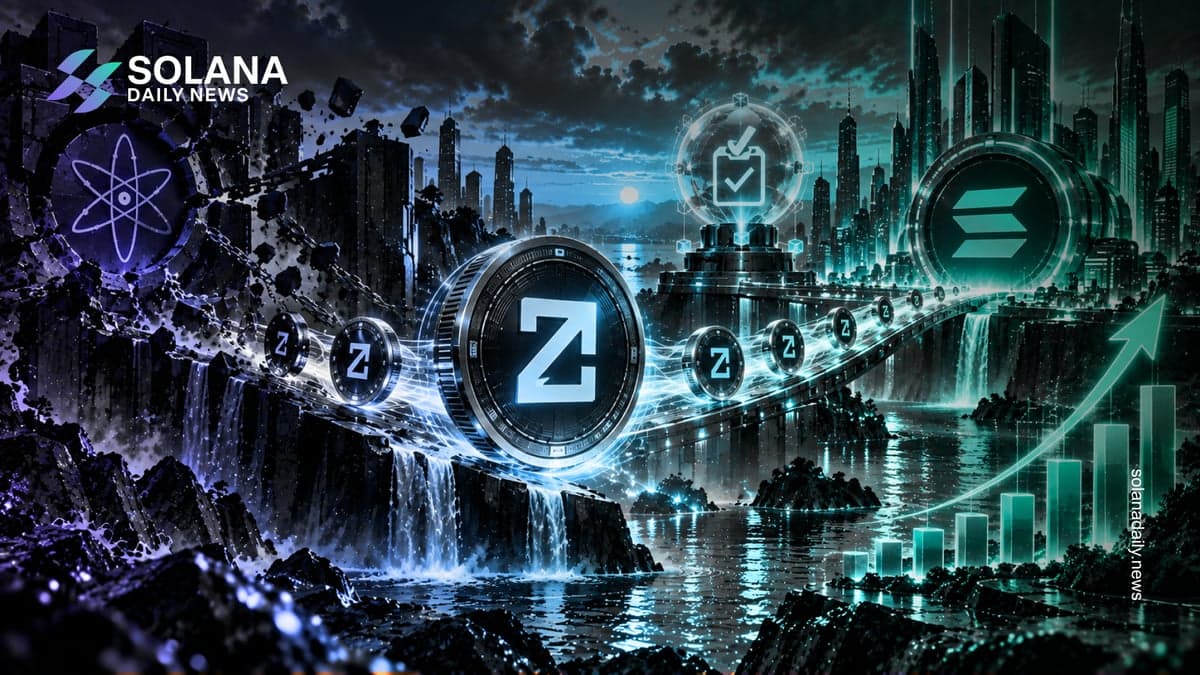
ZetaChain is moving toward a major change in its blockchain strategy after tokenholders approved a proposal to migrate the project and its ZETA token to Solana.
The governance vote, known as Proposal 68, passed on Sept. 20 with 99.4% support and 58% participation, exceeding the required 40% quorum. The decision authorizes ZetaChain to wind down its own Layer 1 and transition ZETA into a native Solana SPL token.
ZetaChain's official website describes the project as a universal layer for AI and Web3. Its current architecture is built around a Cosmos SDK-based Layer 1 that connects applications and assets across multiple blockchain networks, including Solana.
ZETA Will Become a Solana SPL Token
Under the approved plan, existing ZETA on ZetaChain will be converted into a Solana-native SPL token at a 1:1 ratio. The ticker and total token supply are expected to remain unchanged.
The migration is not an immediate token swap. ZetaChain's governance process indicates that a second proposal will establish important operational details, including the snapshot block height, network shutdown timing, token-claim process and other steps required to complete the transition.
That means ZetaChain's current network does not disappear immediately following the vote. Validators and other network infrastructure continue operating during the transition until the subsequent governance process determines how the shutdown will be carried out.
ZetaChain's existing materials explain that ZETA currently functions as the network's native asset, supporting transaction fees, staking, validator incentives and governance. The Solana migration therefore represents a significant change in the role and infrastructure surrounding the token.
Anuma and 300,000 Users Move Into Focus
A major part of the strategy behind the migration is Anuma, ZetaChain's private multi-model AI application.
The project says Anuma has attracted more than 300,000 users. The application is built around ZetaChain's Private Memory Layer, which is designed to let users maintain encrypted context across AI models and applications. ZetaChain currently describes Anuma as the application powered by its private-memory infrastructure.
Recent reporting based on ZetaChain's migration proposal says the move would bring Anuma's user base into the Solana ecosystem alongside ZETA. The proposal frames the shift as a way to focus resources on the AI application and its supporting infrastructure rather than continuing to operate an independent Layer 1.
AI and eZetaChain'scosystem information lists Anuma among its featured applications and describes the project's Private Memory Layer as user-owned, encrypted memory that can persist across AI models, sessions and applications.
ZETA Price Jumps After the Vote
The governance decision was followed by a sharp move in the ZETA market.
According to the supplied market data, ZETA climbed more than 58%, moving from approximately $0.037 to $0.061 after the vote concluded. Other market reports also recorded a sharp increase in ZETA activity following the Proposal 68 result.
The price reaction came as traders responded to the combination of a completed governance decision, a planned Solana migration and the project's increased emphasis on AI infrastructure. The market move reflects trading activity around the announcement and should not be interpreted as a guarantee of future price performance.
The migration itself also remains subject to further implementation steps. The second governance proposal and exchange coordination will determine how holders ultimately move through the conversion process.
Why Solana Is Central to the New Strategy
ZetaChain's decision comes as Solana develops a growing ecosystem around AI agents and machine-to-machine payments.
One of the technologies associated with this trend is x402, an open payment standard that allows software and AI agents to make programmatic payments for internet resources. Solana's official documentation describes x402 as a mechanism through which an agent can request a resource, receive payment requirements and authorize a transaction before the resource is delivered.
Solana's official x402 documentation highlights the network's role in the x402 ecosystem and lists services and infrastructure built around agentic payments. The protocol itself is designed to work across networks rather than being exclusive to Solana, but Solana has developed dedicated infrastructure and tooling for x402-based applications.
This environment is relevant to ZetaChain's new direction because the project is positioning Anuma and its private-memory technology as part of a broader AI application layer.
BlockRun and Laso Feature in Solana's x402 Activity
The supplied data also points to BlockRun and Laso Finance as notable sources of x402-related activity associated with Solana.
BlockRun provides an AI gateway that packages services such as live search, market data and multi-chain RPC access through an OpenAI-compatible interface. Its activity illustrates one of the emerging use cases for agentic payment infrastructure: allowing software to access paid data or computing resources programmatically.
Laso Finance, meanwhile, is another project appearing in x402 ecosystem activity, although its transaction activity is split between Solana and Base. These applications are part of a broader group of services exploring how AI agents can interact with blockchain-based payment rails.
The x402 standard itself remains network-agnostic. Its official documentation describes it as an open payment standard that can support different networks, payment schemes and assets.
ZetaChain Begins a New Chapter Around AI
The approved migration represents more than a change in where ZETA is issued. It marks a strategic shift for ZetaChain from maintaining an independent Layer 1 toward building an application-focused ecosystem around AI, private memory and agent infrastructure.
The immediate roadmap still includes several technical and governance steps before the transition is complete. A second proposal is expected to establish the snapshot and shutdown details, while exchange participation will also be relevant to how the token conversion is implemented.
For ZETA holders and Anuma users, the key change is that the project's future infrastructure is being positioned around Solana rather than ZetaChain's existing standalone Layer 1. If completed as proposed, ZETA will become a Solana SPL asset while Anuma and its growing user base become part of the network's broader AI ecosystem.