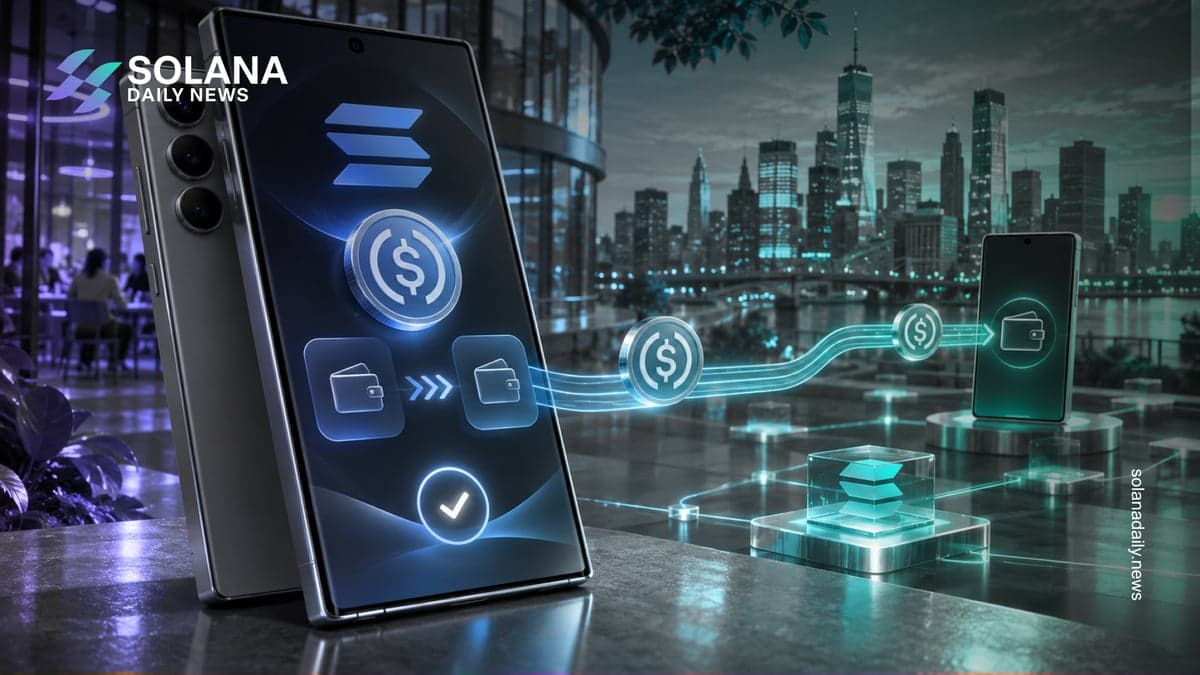
Samsung Brings USDC Transfers to Galaxy Wallet Users Through Solana
Samsung has brought stablecoin functionality to Samsung Wallet, giving eligible U.S. Galaxy users a way to hold, send, and receive USDC without installing a separate cryptocurrency application. The service connects Samsung's existing mobile wallet experience with blockchain-based payments, with Solana among the networks supporting the integration.
The rollout targets approximately 82 million compatible Galaxy devices in the United States. Initially announced on October 7, 2026, the feature was scheduled to become available during the last week of October. It allows users to access stablecoin services alongside their existing payment cards, boarding passes, and identification documents.
Samsung Integrates Stablecoin Accounts Into Its Wallet
The new Stablecoin Account feature adds USDC, a dollar-pegged cryptocurrency issued by Circle, to Samsung Wallet. Eligible users can purchase and hold USDC, send it to other Samsung Wallet users, and transfer it to compatible external cryptocurrency wallets.
The integration is designed to reduce the steps traditionally involved in using stablecoins. Customers do not need to install a separate crypto wallet or personally manage private keys. Instead, they can access the service through Samsung Wallet, with registered Galaxy devices using biometric authentication to approve transfers.
Samsung's official announcement identifies USDC as the first supported stablecoin. The company also outlined potential future features, including online and in-store stablecoin payments and expansion into additional markets, subject to local regulatory requirements.
How Bastion, Coinbase, and Solana Support the Service
The integration involves several companies and infrastructure providers. Samsung supplies the wallet interface, while Bastion provides the custodial wallet, digital asset transfers, and international remittance services. Coinbase provides institutional custody for USDC through Coinbase Prime Vault under an arrangement managed by Bastion.
Solana is among the blockchain infrastructure partners supporting the service. Samsung's announcement also identifies Sui as another network partner, meaning the integration should not be described as exclusively Solana-based. Users must select a supported network when transferring USDC to an external wallet.
The arrangement is custodial rather than self-custodial. Samsung's Stablecoin Account FAQ explains that Samsung does not hold customer funds or act as the bank or digital asset custodian. The service is provided through its regulated partners.
International Transfers Reach More Than 60 Countries
Beyond transfers between cryptocurrency wallets, Samsung Wallet supports international remittances to qualifying bank accounts in more than 60 countries. Recipients can receive payments in their local currencies without needing to maintain a cryptocurrency wallet themselves.
Samsung does not charge users for USDC transfers to compatible external crypto wallets. However, recipient exchanges or wallet providers may impose their own fees. Bank transfers are subject to separate charges, which vary according to the destination country and transaction amount. The applicable fees and estimated delivery time are displayed before users confirm a transfer.
To use the service, eligible customers can open the Stablecoin Account in Samsung Wallet, select the relevant transfer option, and follow the instructions. Users sending USDC to an external wallet must ensure that the receiving platform supports the same asset on the selected blockchain network. Transfers using an unsupported network or incorrect address can result in lost funds.
Who Can Access Samsung's Stablecoin Account?
The initial rollout is limited to eligible U.S. residents aged 18 or older who have a Samsung Account and a compatible Galaxy device running Android 13 or later. Users must complete account registration, identity verification, and biometric authentication setup.
New York residents are currently excluded from the service. Samsung's support documentation also makes clear that a Stablecoin Account is not a traditional bank account. It holds digital assets rather than bank deposits, and USDC balances are not covered by FDIC, NCUA, or SIPC protections.
These restrictions mean that the headline figure of 82 million devices represents the number of compatible Galaxy devices in the United States, not the number of people who automatically qualify or have opened an account.
Solana's Stablecoin Network Activity Supports the Expansion
The Samsung integration arrives as stablecoin activity on Solana continues to expand. The Solana Foundation said the network processed more than $5.25 trillion in stablecoin transaction volume during 2026. The figure highlights the scale of stablecoin transfers taking place across the blockchain.
The supplied market data also places Solana's stablecoin supply at approximately $17.4 billion on October 5, before a later snapshot showed around $15.9 billion. These figures represent different measurement dates and should not be treated as the network's current supply without checking the latest data. The Artemis stablecoin dashboard provides a reference for tracking supply and transaction activity across networks.
The number of stablecoin-holding addresses on Solana has also exceeded 14 million, with nearly five million new holders reportedly added during 2026. These figures measure blockchain addresses rather than verified individual users, since one person can control multiple addresses.
Stablecoin Regulation and Future Payment Features
Samsung's rollout is taking place as U.S. regulators develop rules for payment stablecoins. On September 24, 2026, the Federal Reserve proposed requirements covering reserve backing, capital, risk management, and custody for payment stablecoin issuers under the GENIUS Act. The proposal is available through the Federal Reserve's official announcement.
The Office of the Comptroller of the Currency subsequently finalized rules implementing the GENIUS Act for entities under its jurisdiction. The OCC's final rule is scheduled to take effect on January 18, 2027, and addresses areas including reserves, redemptions, risk management, supervision, and custody.
For Samsung, the current launch provides a way to bring stablecoin transfers into an application already used by Galaxy customers. The company has also identified online and in-store payments as potential future capabilities. Any wider rollout will depend on technical development and regulatory requirements in the markets Samsung seeks to enter.