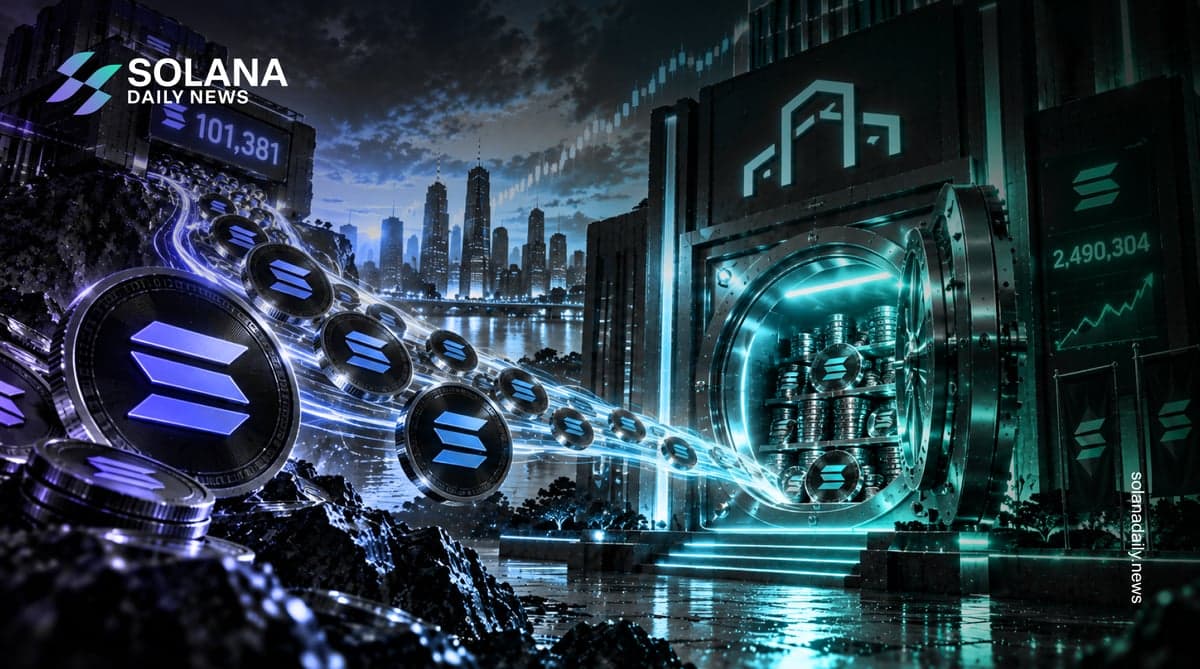
Project Harmonia aims to connect those two systems, giving Solana-based tokenized funds a potential route into Allfunds' existing institutional network.
Solana and Allfunds Launch Project Harmonia
Project Harmonia has opened a Request for Proposals, or RFP, for tokenized-fund issuers, distributors and ecosystem providers interested in participating.
The program is divided into two tracks:
Track A: Funds already tokenized and operating on Solana that are ready for distribution through Allfunds.
Track B: Tokenized funds still under development, with projects expected to join progressively over the next six to 12 months.
Applications do not carry an admission fee, with submissions scheduled to close on October 24, 2026.
The first group of participating funds is expected to begin going live across Solana and the Allfunds network during Q4 2026 and Q1 2027.
This creates a relatively short path from the current application stage to real institutional distribution.
Allfunds Brings Major Distribution Infrastructure
The importance of Project Harmonia comes largely from the scale of the financial network being connected to Solana.
According to the project information, Allfunds connects more than 3,300 asset managers and financial institutions.
The company also reported approximately €1.9 trillion in assets under administration as of June 30, 2026.
That gives Project Harmonia access to an established distribution network rather than requiring every tokenized-fund issuer to build institutional relationships independently.
For asset managers, the structure could provide a way to experiment with blockchain-based products while continuing to use familiar financial distribution infrastructure.
For Solana, it creates another connection between its public blockchain and traditional financial markets.
Why Distribution Matters for Tokenized Funds
Tokenization solves only part of the challenge involved in bringing investment funds onchain.
A fund can be issued as blockchain-based tokens, but investors still need a practical way to discover, access and distribute those products.
That is particularly important for institutional finance, where distribution can involve banks, asset managers, wealth platforms and other regulated intermediaries.
Project Harmonia is designed to provide that missing connection.
A fund already operating on Solana could potentially access Allfunds' distribution network, while projects still being developed can build toward the same infrastructure.
Instead of treating tokenization as a standalone blockchain product, Harmonia attempts to connect onchain issuance with existing financial distribution.
Solana Expands Its Real-World Asset Strategy
Project Harmonia is part of Solana's broader push into real-world assets, or RWAs.
The network has increasingly become home to tokenized financial products covering areas such as funds, equities, credit and other traditional assets represented onchain.
Solana says its ecosystem already contains more than $4 billion in institutional real-world assets.
The network's strategy is also expanding beyond simply issuing tokens representing traditional assets.
Infrastructure is developing around the entire lifecycle of those products, including issuance, transfers, settlement, liquidity and distribution.
Project Harmonia adds institutional distribution to that stack.
What Institutions Could Gain
For financial institutions, one potential benefit is easier access to blockchain-based products without requiring them to build an entirely separate distribution system.
Tokenized funds can potentially provide advantages such as faster settlement, programmable ownership and improved interoperability with other blockchain-based financial applications.
But those technical advantages have limited value if institutions cannot easily access the products.
Connecting Solana to an established fund-distribution network could lower that barrier.
It could also allow blockchain infrastructure to operate behind the scenes while financial institutions continue interacting through systems closer to their existing workflows.
The practical benefits will ultimately depend on which funds join Harmonia and how the integration operates once the first products become available.
First Funds Target Q4 2026
Project Harmonia's first major milestone will come relatively soon.
Applications remain open until October 24, while the first cohort is targeted for deployment during Q4 2026 and Q1 2027.
Track A should provide the earliest test because those funds are already tokenized on Solana and are intended to be closer to institutional distribution readiness.
Track B provides a longer pipeline of products still moving through development.
The first launches should offer a clearer indication of whether combining a public blockchain with an established fund-distribution platform can create meaningful institutional adoption.
Solana Network Development Continues
The institutional expansion is occurring alongside continued development of Solana's underlying network.
Recent ecosystem updates include Transaction V1, while developers are also working toward shorter slot times, lower rent requirements and improvements across Solana's validator infrastructure.
One important target is reducing slot times toward approximately 250 milliseconds.
Development also continues across major validator clients, including Agave and Firedancer, as the ecosystem works to improve performance and resilience.
These improvements become increasingly relevant as Solana supports more demanding financial applications.
Institutional tokenization can require high transaction throughput, predictable settlement and reliable network infrastructure, particularly if products begin operating at significant scale.
Solana Builds a Bridge Between TradFi and Onchain Markets
Project Harmonia reflects a broader shift in blockchain tokenization.
The early stage of the sector largely focused on proving that traditional financial assets could be represented onchain.
The next stage increasingly involves connecting those assets to the institutions that already distribute and manage trillions of dollars in conventional markets.
Harmonia attempts to bridge those environments.
Solana provides the public blockchain infrastructure, while Allfunds contributes an established institutional distribution network.
If the model works, asset managers may not need to choose between traditional distribution and blockchain infrastructure. Tokenized products could potentially use elements of both.
What to Watch Next
The first key date is October 24, when Project Harmonia's initial RFP window closes.
Attention will then shift toward which asset managers and tokenized funds are selected for the first cohort.
The Q4 2026 and Q1 2027 rollout window will be particularly important because it should provide the first practical evidence of how Solana-based funds interact with Allfunds' institutional network.
Other factors to watch include the types of funds being tokenized, institutional demand, regulatory requirements and whether secondary-market or DeFi integrations develop around those assets.
Bottom Line
Project Harmonia is connecting Solana's tokenized-fund ecosystem with Allfunds' institutional distribution infrastructure, creating a potential new route for blockchain-based investment products to reach traditional financial institutions.
Allfunds brings a network connecting more than 3,300 asset managers and financial institutions and approximately €1.9 trillion in assets under administration as of June 30.
Applications for Harmonia remain open until October 24, 2026, with the first participating funds targeted to go live during Q4 2026 and Q1 2027.
For Solana, the initiative represents another step beyond simply putting traditional assets onchain. The focus is increasingly shifting toward building the distribution, settlement and institutional infrastructure required to make tokenized assets usable at scale.
Solana — Official Website
Solana — Institutional & Financial Infrastructure
Solana — Real-World Assets
Allfunds — Official Website
Solana — Network News and Development Updates