Solana Governance Proposal Targets Major Tokenomics Changes
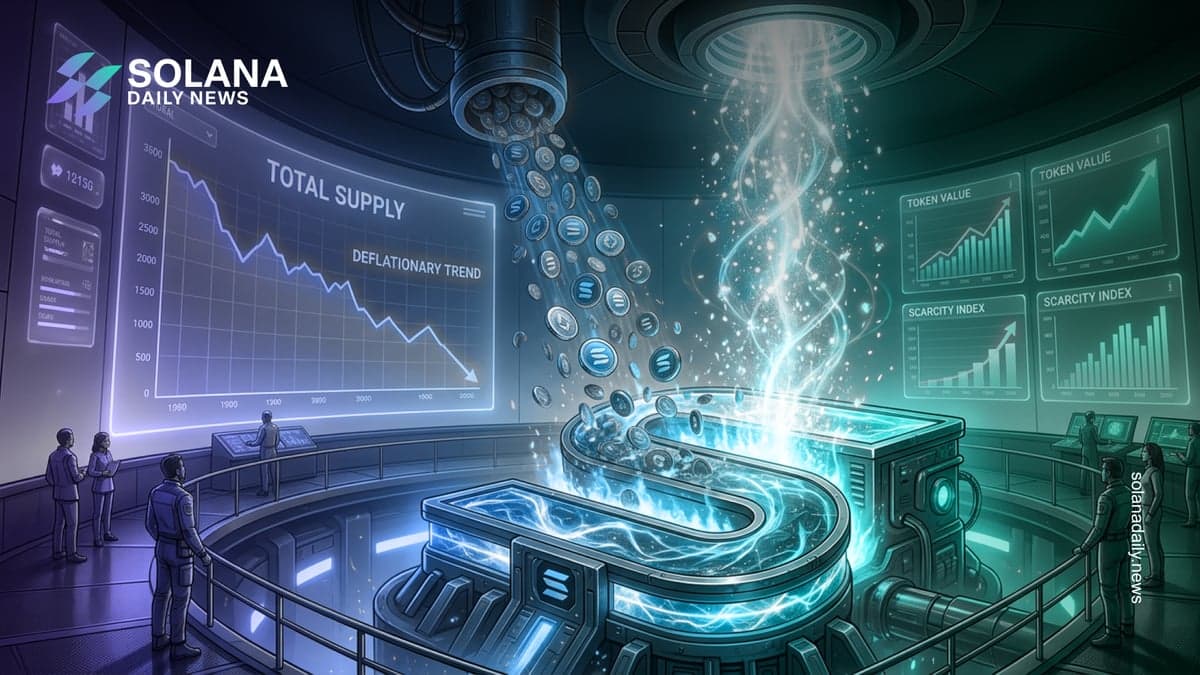
A new governance proposal within the Solana ecosystem could significantly reshape the network's tokenomics by increasing the amount of SOL burned each day while reducing future token issuance.
Validators have begun signaling support for SIMD-0553, a proposal introducing resource-based transaction fees that charge users based on the computing resources consumed by each transaction. If approved, the proposal could substantially increase the amount of SOL permanently removed from circulation.
Together with a second proposal, SIMD-0550, the changes aim to tighten SOL's circulating supply by increasing token burns while accelerating the network's disinflation schedule.
Daily SOL Burns Could Rise More Than 10x
Under the proposed fee model, daily SOL burns would increase dramatically.
Current network activity burns approximately:
If SIMD-0553 is implemented, projected daily burns would rise to:
The proposal introduces a resource-based fee structure, meaning transactions consuming more network resources would pay higher fees, resulting in greater token burns.
SIMD-0550 Would Accelerate Solana's Disinflation
Alongside the fee proposal, SIMD-0550 seeks to speed up Solana's token emission reduction schedule.
The proposal would:
Increase the annual disinflation rate to 30%
Bring Solana's 1.5% inflation floor forward to 2029, instead of 2032
Reduce total token emissions by approximately 18.9 million SOL over six years
At current prices, those reduced emissions are valued at roughly $1.36 billion.
For context, Solana's inflation rate currently stands at approximately 3.8%, down from its initial 8% launch rate under the protocol's scheduled annual reductions.
Understanding SIMD and SGP
The proposals follow Solana's governance framework:
SIMD (Solana Improvement Document): Technical proposals submitted by core developers to improve the protocol.
SGP (Solana Governance Proposal): A newer governance process that allows validators to approve major protocol changes through stake-weighted voting.
Together, SIMD-0550 and SIMD-0553 are designed to influence both sides of Solana's token economy—reducing new issuance while increasing the number of tokens permanently removed from circulation.
Validator Support Still Below Voting Threshold
Although validator support has started to build, the proposal has not yet qualified for an official governance vote.
Current figures show:
24.94 million SOL signaling support
Around 5.8% of the 432.65 million SOL currently staked
Approximately 38% progress toward the required 15% signaling threshold
To advance to a formal vote, the proposal still requires an additional:
The signaling period remains open until August 18.
Helius Leads Validator Support
So far, 16 validators have signaled support for the proposal, representing roughly 2.3% of Solana's validator network.
Among the largest supporters:
Helius: 16.03 million SOL
Blueshift: 3.6 million SOL
Temporal Emerald: 1.24 million SOL
Helius alone accounts for nearly two-thirds of the total supporting stake. Notably, the company also employs the engineer responsible for developing SIMD-0550.
Burn Increase Alone Won't Make SOL Deflationary
Despite the significant projected increase in token burns, the proposal would not immediately make SOL deflationary.
Even under the highest projected burn rate of 9,000 SOL per day, the network is still expected to issue approximately 60,000 SOL daily through inflation.
This explains why the two proposals are being advanced together:
Combined, they could have a much greater long-term impact on Solana's supply dynamics than either proposal would achieve independently.
What Happens Next?
The Solana Foundation introduced the 15% signaling threshold in July to ensure only proposals with meaningful validator backing proceed to a formal vote.
With roughly two weeks remaining before the August 18 deadline, supporters must secure nearly 40 million additional SOL in validator backing.
Whether enough validators join the initiative will determine if the proposals move forward and potentially reshape Solana's monetary policy.
Conclusion
The combined SIMD-0553 and SIMD-0550 proposals represent one of the most significant changes to Solana's tokenomics in recent years. By increasing daily SOL burns and accelerating the network's disinflation schedule, supporters aim to reduce long-term token supply and strengthen the ecosystem's economic model.
However, with less than half of the required validator support secured, the proposals must gain significant backing before advancing to an official governance vote.