Raydium Takes the Lead in Solana Memestock Trading
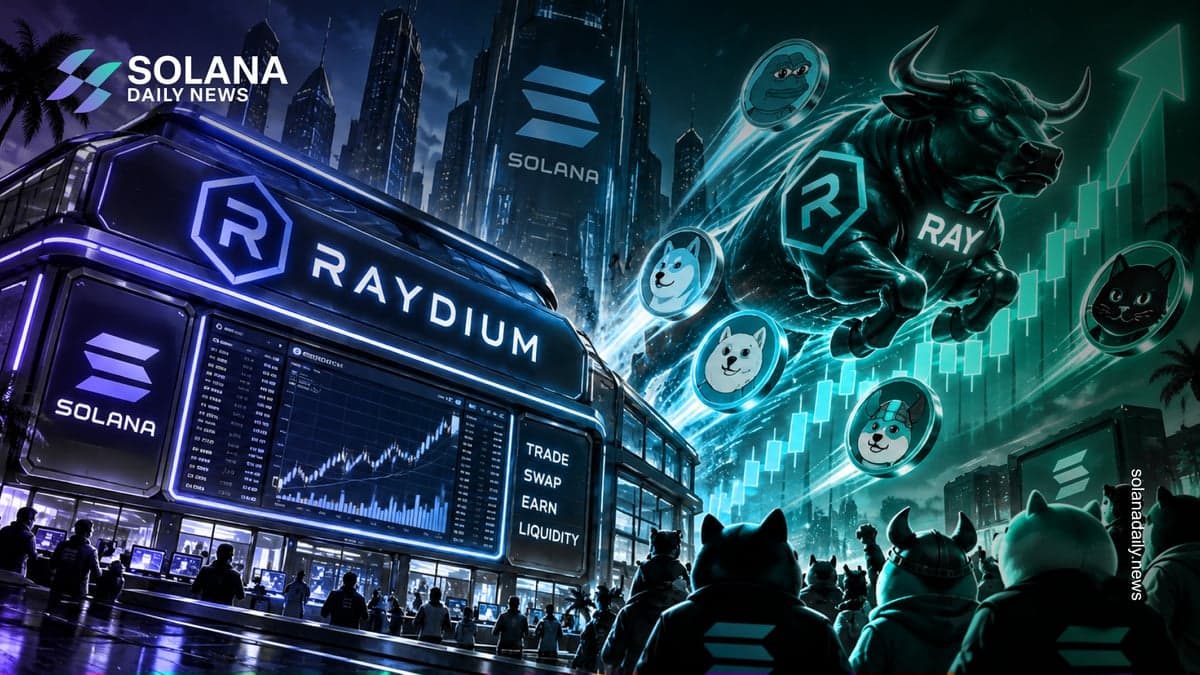
Raydium has become the leading liquidity venue for Solana’s rapidly expanding memestock market, according to the data in the supplied report. More than 90% of memecoin-equity DEX volume is now flowing through the Solana-based decentralized exchange, as trading activity around tokenized equities and meme-token pairs accelerates.
The increase has been particularly rapid. Memecoin-equity pairs on Solana had generated about $300 million in cumulative volume before activity climbed to approximately $778 million in only 10 days. Raydium accounted for almost all of that trading during the period.
Data cited from Blockworks showed Raydium processed approximately $721.5 million of the $778.9 million in combined memecoin-equity volume on September 17. Other Solana DEXs handled about $57.4 million. Raydium describes itself as an AMM, DEX and liquidity infrastructure protocol built on Solana, with products covering swaps, liquidity provision and token launches.
Tokenized Stock Trading Passes $5 Billion
The growth in memestock activity has also expanded Raydium’s role in Solana’s broader tokenized-equity market. The supplied figures put Raydium’s cumulative tokenized stock trading volume above $5 billion, highlighting how quickly equity-linked assets have become part of the network’s onchain trading activity.
Raydium contributor Infra has highlighted the protocol’s growing share of this market. The supplied report also cites xStocks, which recorded more than $500 million in tokenized-asset trading volume over 10 days, with SPYx leading activity among meme-tokenized pairs. According to the supplied source, all of that volume was routed through Raydium.
Another platform, StonkFun, has reportedly routed approximately $1.7 billion in cumulative volume through Raydium. Raydium also recorded a weekly tokenized-equity volume high of $738 million last week, according to the supplied data.
Raydium’s own documentation confirms that trading fees are distributed between liquidity providers, RAY buybacks and the protocol treasury. For its CLMM and CPMM pools, 12% of trading fees is allocated to RAY buybacks.
SEC Exemption Brings Tokenized Stocks Into Focus
The surge in tokenized-equity trading comes as U.S. regulators create a temporary framework for certain forms of onchain stock trading.
On September 17, 2026, the U.S. Securities and Exchange Commission issued an Innovation Exemption providing temporary, conditional relief for certain Tokenized Securities Venues. The framework allows eligible venues to facilitate trading in tokenized National Market System stocks through permissioned automated market makers and liquidity pools.
The SEC’s order includes several conditions. Among other requirements, tokenized stocks traded through covered venues are subject to limits on symbols and trading volume. Venues must also verify that eligible tokenized stocks provide holders with the same rights and privileges as the equivalent traditional NMS stock. Smart contracts used by these venues must be auditable, public and deployed on a public, permissionless distributed ledger.
The exemption is scheduled to remain in effect for five years, while the SEC seeks public comment and considers potential longer-term regulatory changes.
SEC Innovation Exemption — official announcement
Permissioned Liquidity Could Matter for Raydium
The regulatory development is notable because the supplied report says Raydium introduced Permissioned AMMs in July, designed to allow regulated and KYC-gated assets to access Raydium liquidity while restricting participation to approved wallets.
That structure is relevant to the SEC’s new framework because the agency specifically describes permissioned AMM liquidity pools as part of the temporary exemption. The SEC defines a Tokenized Securities Venue as a venue that brings buyers and sellers together through AMM liquidity pools and establishes access standards for participants.
The regulatory change does not mean that Raydium itself has received SEC approval, nor does it automatically place every tokenized stock traded on Solana within the exemption. Instead, the framework establishes conditions under which qualifying venues can receive temporary relief. Any connection between Raydium’s infrastructure and that framework therefore depends on the specific structure and regulatory status of individual venues and assets.
SEC Tokenized Securities Venue order
RAY Rally Coincides With Higher Activity
The increase in Raydium trading activity has occurred alongside a major move in the protocol’s native RAY token. According to the supplied report, RAY gained 109.2% over two weeks and 169% over one month, reaching its highest price since January.
Several developments accompanied the move. StonkFun shifted its new launches to Raydium, while tokenized stocks from platforms including Backpack and xStocks also routed activity through Raydium.
Recent market reports independently confirm that StonkFun moved its new deployments to Raydium’s LaunchLab in early September and that Raydium recorded a $640,788 RAY buyback during the period.
Raydium protocol fee and buyback documentation
Raydium’s Buyback Mechanism
Raydium’s fee structure provides a direct connection between trading activity and RAY purchases. The protocol documentation states that 12% of trading fees from CLMM and CPMM pools goes toward RAY buybacks.
The supplied report says Raydium carried out its largest reported single buyback in almost two years on September 8, purchasing approximately $640,788 worth of RAY. It also says the protocol has spent roughly $203 million on cumulative RAY buybacks, including approximately $1.4 million during the previous week.
The report further states that Raydium has used about 12% of protocol fees for buybacks and that the cumulative RAY repurchased represents more than 30% of circulating supply. Infra estimates the adjusted circulating supply at approximately 187 million RAY after accounting for repurchased tokens.
Raydium’s Balance Sheet and Token Supply
According to the supplied report, Raydium also holds approximately $62 million in SOL and USDC on its balance sheet, with those holdings publicly verifiable onchain.
The report says team and investor token unlocks ended in February 2024, while remaining dilution from liquidity incentives was described by Infra as minimal. These details are relevant to the token-supply discussion because they distinguish historical investor and team unlocks from ongoing liquidity incentives.
Raydium's public documentation provides information about its protocol revenues, RAY token economics and buyback mechanism, while its public API exposes information about pools, liquidity and trading activity.
Raydium official documentation
Solana’s Trading Infrastructure Enters a New Phase
Raydium’s recent activity places the protocol at the intersection of several fast-growing areas of Solana trading: memecoins, tokenized equities and decentralized liquidity.
The immediate growth has been driven by a combination of meme-token activity, stock-linked assets and new launches flowing through Raydium. At the same time, the SEC’s September 17 Innovation Exemption creates a temporary regulatory framework for certain permissioned onchain venues trading tokenized NMS stocks.
For Raydium, the important question is whether the recent trading surge develops into sustained activity. The supplied figures show a rapid increase in volume, while the protocol’s existing fee structure means higher trading activity can also increase the amount allocated to RAY buybacks. Whether these elevated volumes persist will determine how durable the recent expansion becomes.
Raydium official platform