Bitcoin took a step toward quantum resistance this week as StarkWare tested a post-quantum transaction on the mainnet, while Solana validators agreed to burn 18.9 million SOL tokens to curb inflation. The dual developments signal infrastructure upgrades across major blockchain networks as technical threats and tokenomics come under scrutiny.
StarkWare researcher Avihu Levy deployed an experimental quantum-resistant transaction on Bitcoin's mainnet, according to Cointelegraph, marking the first real-world test of protections designed to shield transactions during the brief window when public keys become exposed in the mempool. The test consumed a 10,000-satoshi output using Levy's Quantum Safe Bitcoin (QSB) scheme, which combines hash-based one-time signatures with computational searches to bind transactions without revealing vulnerable cryptographic keys.
Why Is Bitcoin Moving Toward Quantum Resistance?
The quantum threat to Bitcoin remains debated within the community, but development work is accelerating regardless. Quantum computers could theoretically break the elliptic curve cryptography that secures Bitcoin addresses, particularly during the brief period when a transaction's public key is visible before confirmation. Levy's QSB approach addresses this vulnerability by never exposing the public key in a form that quantum algorithms could exploit.
The mempool exposure window — typically 10 to 60 minutes — represents Bitcoin's most vulnerable attack surface. A sufficiently powerful quantum computer could intercept a transaction, derive the private key from the exposed public key, and redirect funds before miners confirm the block. While such machines don't exist today, researchers are building defenses now to avoid a sudden crisis when quantum computing reaches the necessary threshold.
What Did Solana Validators Decide About Inflation?
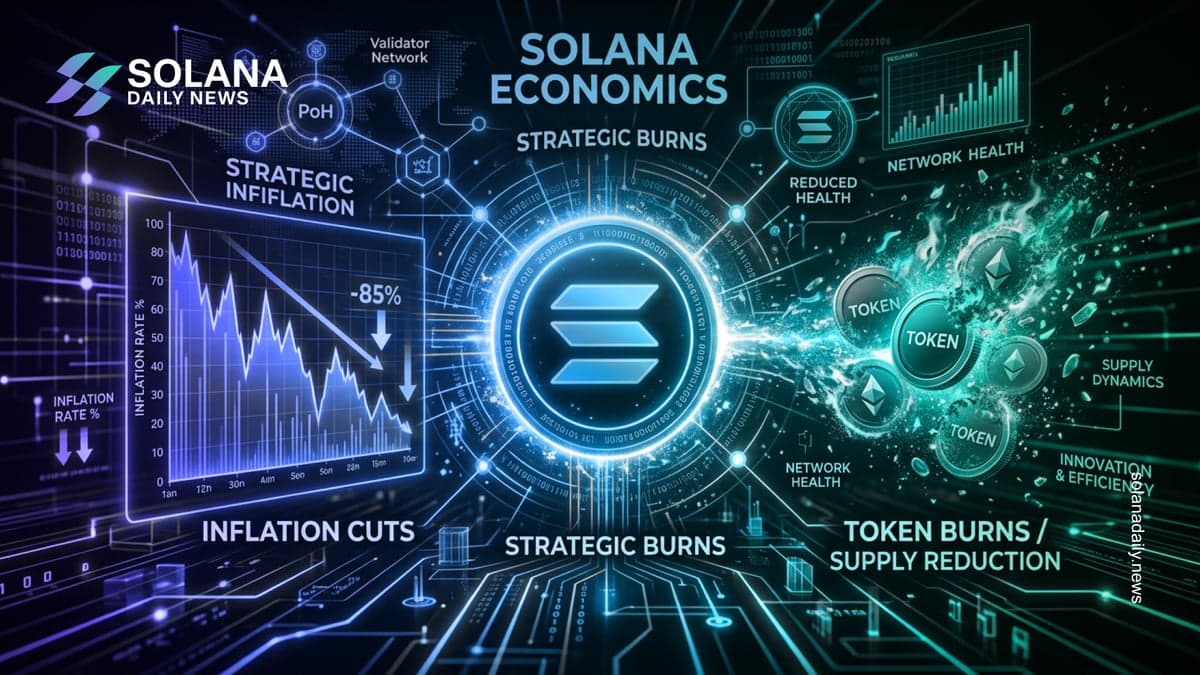
Solana validators agreed to cancel 18.9 million SOL in future inflation, a move designed to address concerns about token supply growth. The decision reflects broader validator consensus on reining in emission schedules that have drawn criticism from long-term holders. Solana's current inflation rate has been a point of contention, particularly as competing Layer 1 networks adopt deflationary or low-inflation models.
The 18.9 million SOL cancellation represents a significant supply adjustment for the network. At current prices, the canceled tokens would have added hundreds of millions of dollars in sell pressure over time. Validator votes carry binding authority on Solana, making this decision final once implemented through a network upgrade.
Network | Action | Impact |
|---|
Bitcoin | Quantum-resistant transaction tested | Mempool protection validated |
Solana | 18.9M SOL inflation canceled | Reduced future supply growth |
What Does Bernstein Say About Bitcoin's Price Potential?
Bernstein issued a bull case for Bitcoin to peak at $500,000 during the current cycle, according to the report. The projection assumes continued institutional adoption through spot exchange-traded funds and sustained macroeconomic tailwinds. Bernstein's forecast sits at the upper end of Wall Street price targets, reflecting optimism around ETF inflows that have absorbed billions in capital since January 2024.
The $500,000 target implies a market capitalization exceeding $10 trillion, placing Bitcoin in the same valuation range as gold. Bernstein's analysis points to ETF demand as the primary driver, with spot products providing a regulated on-ramp for pension funds, endowments, and sovereign wealth managers. The firm has consistently ranked among the most bullish traditional finance analysts covering digital assets.
What Should Validators and Holders Watch Next?
For Bitcoin, the next milestones include broader deployment of quantum-resistant address formats and potential soft fork proposals to enshrine post-quantum cryptography at the protocol level. Development timelines remain speculative, but mainnet testing accelerates the path toward production-ready solutions. Network participants will need to migrate funds to quantum-safe addresses well before quantum computers pose a real threat, creating a years-long transition window.
On Solana, the inflation cancellation must be coded into a validator client update and activated through consensus. The network's governance process allows validators to approve changes without requiring token holder votes, streamlining technical adjustments. Future inflation decisions will likely remain contentious as Solana's staking yield depends partly on new token issuance to reward validators.
Both developments underscore the infrastructure work happening beneath volatile price action. Bitcoin's quantum defenses and Solana's supply adjustments address long-term sustainability rather than near-term speculation, positioning both networks for challenges that extend beyond the current market cycle.
StarkWare — Bitcoin Quantum Resistance
Bitcoin Developer Documentation — Transactions and Cryptography